Kingston removals common problems with narrow staircases
Posted on 19/06/2026
Kingston removals common problems with narrow staircases: what usually goes wrong and how to plan around it
If you are moving in Kingston and the staircase is tight, twisting, or just plain awkward, you already know the feeling: one sofa, one landing, and suddenly the whole day feels a bit more complicated. Kingston removals common problems with narrow staircases are not rare at all, especially in flats, older terraces, converted houses, and upper-floor properties where access was clearly not designed with a three-seater sofa in mind. The good news? Most of these issues can be managed with a bit of planning, the right team, and a realistic approach.
In this guide, we will walk through the typical risks, how removals teams handle them, what you can do before moving day, and the little details that save time, money, and stress. If you want a broader look at moving options first, the site's services overview and removals in Kingston upon Thames pages are a helpful starting point.
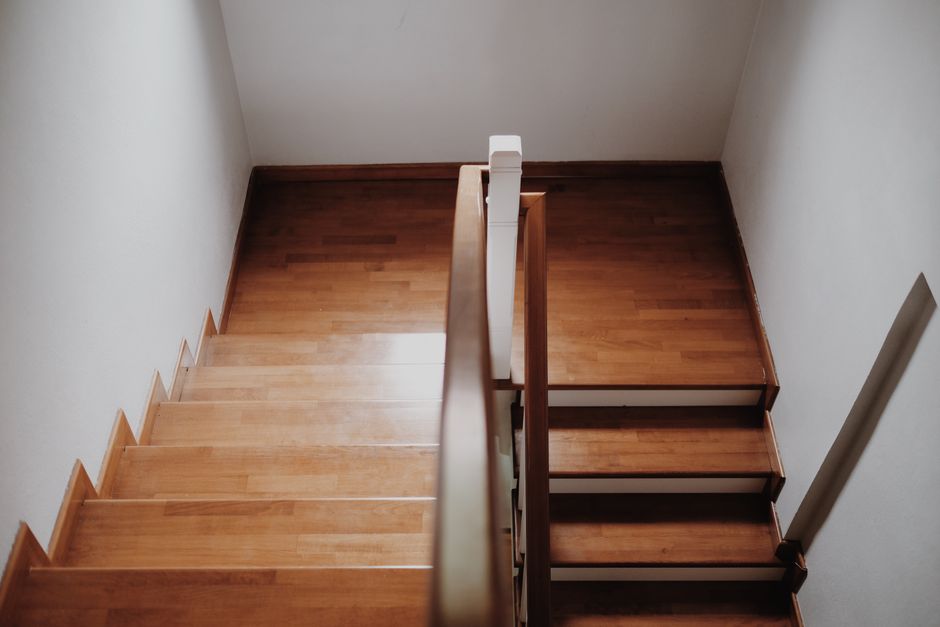
Why Kingston removals common problems with narrow staircases matters
Narrow staircases affect more than just convenience. They shape how the whole move is planned. A bed frame that would be simple on a ground-floor property can become a two-person puzzle if the landing is tight, the turns are sharp, or the banister leaves no spare room. Even boxes can slow things down if the stairs are steep and there is nowhere safe to pause.
In Kingston, this matters because a lot of homes and flats have access quirks. Some have compact communal stairwells, some have older internal stairs with awkward angles, and some have low ceilings or corners that make larger furniture difficult to turn. It is not just about strength. It is about measurement, timing, and protecting the property as you go.
To be fair, many moving problems on staircases are not dramatic disasters. They are smaller friction points that pile up: a wardrobe that needs to be carried at a strange angle, a fridge that bumps the wall, or a mattress that simply will not bend the way you hoped. A move that should feel organised starts to feel improvised. That is where good planning pays for itself.
Expert summary: with narrow staircases, the biggest risks are usually not the items themselves but the angles, landings, and handling space. Measure early, reduce clutter, protect surfaces, and plan the route before move day.
If your move is into a flat, you may also find the guidance on flat removals in Kingston upon Thames useful, especially when access is shared or stairs are the main challenge.
How Kingston removals common problems with narrow staircases works
Let's keep this simple. The process usually starts with an access check. A removals team will want to know the width of the staircase, the width of the narrowest point on each landing, ceiling height, whether the stairs turn sharply, and whether there are doors that open into the route. They may also ask about bannisters, handrails, and whether the staircase is internal or communal.
Then comes the item-by-item assessment. Sofas, wardrobes, mattresses, dining tables, cabinets, and pianos all behave differently. A slim chair can pass through where a bulky armchair cannot. A bed base may be easy; the headboard may be the troublemaker. Oddly enough, it is often the "simple" items that cause the most head-scratching. A mirror that catches the light just right can also become the thing everyone suddenly worries about.
On moving day, the team will normally decide whether to carry the item upright, tilted, rotated, or in some cases dismantled. Protection is important too: blankets, wraps, corner guards, stair protection, and careful spotting by team members reduce the chance of scrapes. If there is no safe path, the team may recommend an alternative plan such as partial dismantling, a different loading point, or temporary storage.
If the staircase is exceptionally restrictive, a man and van service in Kingston upon Thames may suit smaller loads, while a larger household move may need a fuller house removals arrangement with more hands on deck. It really depends on the property and the furniture, not just the postcode.
Typical access problems you may run into
- Stairs too narrow for bulky sofas, wardrobes, or beds
- Sharp turns that stop items from rotating cleanly
- Low ceilings on landings or under stairwells
- Banisters that leave no room for safe lifting
- Slippery, worn, or badly lit stairways
- Shared staircases where you must avoid blocking neighbours
- Furniture that can only move if partially dismantled
Key benefits and practical advantages
Planning for narrow staircases gives you more control. That sounds obvious, but in removals obvious things are often the ones people skip. When you prepare properly, you cut down on delays, avoid last-minute dismantling, and lower the chance of damage to both your furniture and the building.
One of the biggest benefits is predictability. If a team knows the staircase is tight, they can bring the right equipment, the right vehicle, and enough crew. They can also pack the move in a way that keeps the awkward items until the end or the beginning, depending on the route. That means fewer pauses in the middle of the job, which is where momentum tends to disappear.
There is also a trust benefit. A removals company that asks sensible questions early is usually one that understands real-world access issues. They are not just taking the booking; they are thinking through the move. That matters, especially if you want a smoother day and fewer surprises when everyone is already tired, a bit sweaty, and looking at a couch that will not pivot. Happens more often than you'd think.
For customers comparing services, looking at removal companies in Kingston upon Thames alongside pricing and quotes can help you judge which providers are actually factoring in access problems rather than pretending every move is the same.
| Approach | Best for | Pros | Limitations |
|---|---|---|---|
| Full pre-move survey | Flats, older houses, bulky furniture | Accurate planning, fewer surprises | Takes a little more time upfront |
| Short access check by phone or video | Smaller, simpler moves | Quick and convenient | Can miss fine details like ceiling height or corners |
| Partial dismantling on arrival | Oversized furniture | Creates extra clearance when needed | May add time if not prepared in advance |
| Storage before delivery | Very restricted access or delayed completion | Reduces pressure on moving day | Extra cost and coordination |
If your move includes items that are unusually heavy or delicate, such as uprights or digital pianos, you may want to look at piano removals in Kingston upon Thames. Narrow stairs and specialist items are a tricky mix, and not the kind of problem you want to improvise through.
Who this is for and when it makes sense
This advice is for anyone moving from or into a property where staircase access is tight enough to make ordinary lifting awkward. That includes renters in upper-floor flats, homeowners in period properties, students moving into compact accommodation, and small businesses moving equipment into offices with internal stairs.
It also makes sense if you are moving with limited time. Same-day or rushed moves do not leave much room for trial and error. If a delivery window is tight, or another contractor is waiting on the same day, a staircase problem can snowball fast. In those cases, a little extra preparation is worth a lot.
Students in particular often underestimate how much of their move will be decided by stairs and doorways, not box count. A dozen light boxes are fine. A mattress, desk, and chest of drawers in a narrow stairwell? Very different story. For those moves, student removals Kingston upon Thames can be a practical option, especially where access is limited and the job needs to be quick.
Office moves can have the same issue, just with different objects. Filing cabinets, desks, screens, and IT equipment can all be awkward on stairs. If that sounds familiar, office removals in Kingston upon Thames are worth considering because a commercial move often needs tighter scheduling and more careful handling.
Step-by-step guidance
Here is a practical way to handle narrow staircases without turning moving day into a slow-motion obstacle course.
- Measure the route properly. Check the staircase width, landings, turns, ceiling height, and any door swing that affects the route. Do not just guess from the bottom step. Measurements at the tightest point matter most.
- List the awkward items first. Anything wide, heavy, fragile, or oddly shaped should be flagged early. Sofas, mattresses, beds, wardrobes, mirrors, and tables are the usual suspects.
- Ask whether items can be dismantled. A lot of furniture becomes easier once legs, shelves, doors, or frames are removed. Keep fixings in labelled bags. Small thing, huge difference.
- Protect the route. Use floor coverings, blankets, and edge protection where needed. Even a careful move can scuff a wall if the space is tight enough.
- Decide the order of loading. It often helps to move the biggest items at the point of least fatigue, not after everyone is already worn out.
- Leave enough time between items. Tight staircases slow the rhythm. Rushing increases the chance of damage.
- Have a fallback plan. If a piece will not fit, decide in advance whether it will be dismantled, stored, or moved separately.
A sensible removals team will help you shape this plan. If you want a service built around careful transport and loading, the furniture removals page is a good match for this kind of access challenge.
Expert tips for better results
Here is where the small gains live. The sort of things that save a move from becoming awkward.
Tip 1: photograph the staircase from both ends. A quick set of pictures helps the removals team understand the route better than a vague "it is a bit narrow" ever will. Add a photo of the landing, too.
Tip 2: test the biggest item first if the team recommends it. Some people want to save awkward furniture for later, but testing the hardest item early can be smarter. If it does not fit, you can still switch plan without losing the whole day.
Tip 3: clear the hallway before the crew arrives. Shoes, bins, coat stands, child gates, and the mysterious box that has been living beside the stairs for months all slow the job down. They also make the area feel smaller.
Tip 4: use tape or labels on dismantled parts. It sounds dull, but it stops confusion when you reassemble furniture later. Somewhere in every move there is always one screw that tries to escape. Always.
Tip 5: be honest about access even if it sounds inconvenient. A good company would rather hear the bad news early than discover it while wrestling a wardrobe halfway up the stairs. Truth be told, that is how the expensive delays begin.
If you are comparing providers, it can also help to review removal services in Kingston against a smaller option like man with a van Kingston. The right fit depends on scale, access, and how much loading support you need.

Common mistakes to avoid
The most common mistake is assuming the staircase problem will sort itself out on the day. It usually will not. If the route is tight, the route is tight. No amount of optimism changes the shape of a landing.
Another frequent issue is underestimating the size of modern furniture. Flat-pack items can be deceptive. Once assembled, they are often far less flexible than people expect. Mattresses are another classic surprise. They may bend a little, but not enough to solve every angle.
Here are the errors that cause the most trouble:
- Not measuring the narrowest point of the staircase
- Forgetting about bannisters, radiators, or low ceilings
- Leaving bulky furniture assembled when dismantling was possible
- Assuming "it should be fine" without checking the route
- Blocking the staircase with boxes before the big items are moved
- Not warning neighbours in shared buildings
- Choosing the cheapest quote without discussing access issues
That last one matters more than people think. A low quote can look appealing until the company adds time for difficult access, or simply arrives without the right plan. If you want to avoid that kind of headache, this guide on hidden removals charges in Kingston is worth a read as part of your research.
Tools, resources and recommendations
You do not need specialist gear for every move, but a few sensible tools can make narrow staircases much easier to deal with. The right kit tends to be boring, honestly, in the best possible way.
- Measuring tape for staircase width, turning points, and furniture dimensions
- Protective covers and blankets for walls, bannisters, and furniture edges
- Strong labels or marker pens for dismantled parts and box rooms
- Furniture sliders or moving straps where appropriate and safely used
- Torches or extra lighting for dim stairwells and basement access
- Box cutters and basic tools for dismantling where needed
For storage-based solutions, especially when access is awkward or your completion date is uncertain, it may help to review storage in Kingston upon Thames. Storage can buy time, which is often the simplest answer when the staircase is the real bottleneck.
And if your move involves a vehicle choice, the removal van Kingston upon Thames page gives a useful sense of how transport is matched to different move sizes. The van matters less than the access route, but both have to work together.
Law, compliance, standards and best practice
For a home move, the practical focus is usually safety, access, and care for property rather than complicated regulation. That said, good removals practice in the UK generally means taking reasonable steps to protect people and premises, and working in line with common health and safety expectations.
In plain English, that means the team should avoid unsafe lifting, protect stair surfaces where sensible, and assess whether an item can be moved without unnecessary risk. If a staircase is too tight to move something safely, the correct answer is not to force it. It is to change the plan.
Insurance and safety matter here too. Ask whether the company has procedures for handling access problems, how they protect items in transit, and what happens if damage occurs. A clear, calm explanation is usually a good sign. For broader reassurance, the company's insurance and safety and health and safety policy information can help you understand the approach.
If you are paying online or arranging a deposit, it is sensible to review payment and security and the terms and conditions before you book. Not glamorous, perhaps, but it is one of those small steps that prevents awkwardness later.
Options, methods, or comparison table
There is no single best method for every staircase. The right choice depends on the size of the property, the furniture, and how tight the route really is.
| Method | When it works well | Main advantage | Watch out for |
|---|---|---|---|
| Carry items intact | Wide enough stairs and smaller furniture | Fast and simple | Can fail suddenly if angles are tighter than expected |
| Dismantle furniture first | Wardrobes, bed frames, tables, shelving | Creates extra clearance | Needs time and careful labelling |
| Move in smaller loads | Student moves, limited access, partial moves | Less strain on the staircase route | May take multiple trips |
| Use storage temporarily | Completion delays or severe access limits | Removes pressure from the move day | Requires extra planning and cost |
For smaller, quicker jobs, a flexible approach such as man and van Kingston upon Thames may be enough. For bigger properties, a fuller move with a larger crew is often safer and simpler. No prizes for making things harder than they need to be.
Case study or real-world example
A typical Kingston scenario goes like this. A couple moves out of a first-floor flat in a converted house. The staircase is narrow, the turn at the landing is awkward, and the sofa looks fine in the lounge but not so fine in the hallway. The mattress is manageable. The sofa, less so.
Instead of trying to force the sofa through intact, the removals team checks whether the legs can be removed and whether the armrests can be separated. They also protect the wall on the landing and clear the route of picture frames, plant pots, and a folded bike that was living by the stairs. The move takes a little longer than a standard job, but it stays controlled. No scraping noises. No damaged paint. No one getting grumpy by 10 a.m., which is honestly half the battle.
In another common situation, a student moving into a compact flat has several boxes but one awkward desk chair and a bed base that needs to go up three flights. The team spaces the items carefully, keeps the route clear, and takes the bed base first while everyone still has energy. That tiny detail makes the whole move feel calmer.
These are the kinds of moves that benefit from early access checks. If your situation feels similar, the local insight on estate removals and flats access in Norbiton can give you a useful sense of what to expect in Kingston-style properties.
Practical checklist
Use this before moving day. It is simple, but it works.
- Measure the staircase width, landings, and tightest turns
- Check ceiling height and bannister clearance
- List every bulky or fragile item
- Decide what can be dismantled in advance
- Pack tools, screws, and labels together
- Clear hallways, stairs, and landings
- Protect floors, walls, and banisters
- Tell the removals team about any shared access restrictions
- Confirm whether parking or loading space is needed
- Keep a fallback plan for items that do not fit
If your move is urgent and the access issue is one more thing on a long list, it may be sensible to look at same day removals in Kingston upon Thames. Just remember that urgent moves need even clearer communication than usual. There is less room to improvise.
Conclusion
Narrow staircases are one of the most common reasons a move in Kingston becomes more complicated than expected, but they do not have to ruin the day. With careful measuring, honest communication, sensible dismantling, and the right moving method, most access problems can be handled without drama.
The main idea is straightforward: do not leave staircase planning until the van arrives. The earlier you spot the issue, the more options you have. That usually means less stress, fewer surprises, and a move that feels orderly rather than rushed. And let's face it, moving is tiring enough already.
Get a free quote today and see how much you can save.
When the staircase is tight, the best outcome is not brute force. It is calm planning, steady hands, and a move that gets done properly. One careful step at a time.